Flower Vending Machine Guide: Compartments and Cooling
Compartment sizes, bouquet formats, anti-fog glass, cooling and the rotation routine that protects margin in refrigerated flower vending.
Quick answer: 2067×1700×985 mm · +4°C to +25°C · 850 W
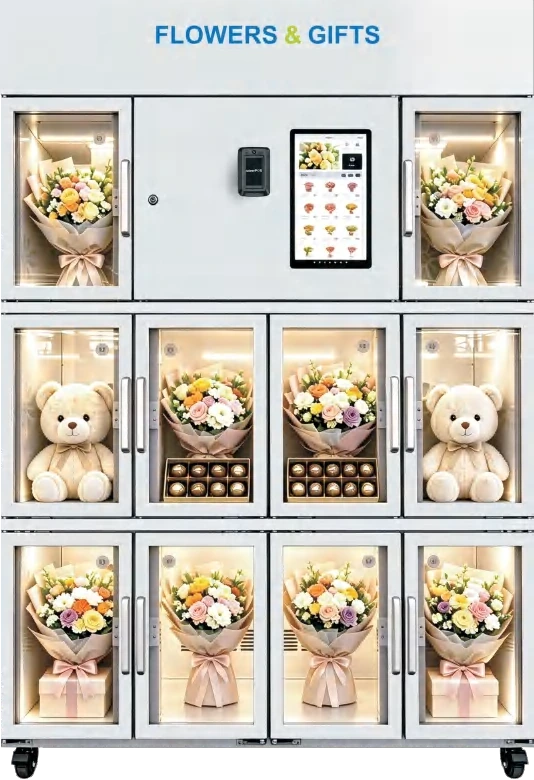
Flower vending works when the cabinet protects the product and the assortment matches the location. A bouquet that spends the day in a warm corridor, behind fogged glass, will not sell twice. A cabinet full of the wrong bouquet formats will sit half empty while the best seller runs out.
This guide covers the decisions that determine whether a flower vending installation earns its space. The flower and gift line contains the window and compartment formats referenced here, and the product overview shows the adjacent chilled cabinets.
What bouquet formats will you sell?
Start with the bouquet, not the cabinet. Measure the height, width and stem length of the bouquets you plan to sell, including the wrapping and the water source. A single stem, a small bouquet and a large gift arrangement need different door sizes.
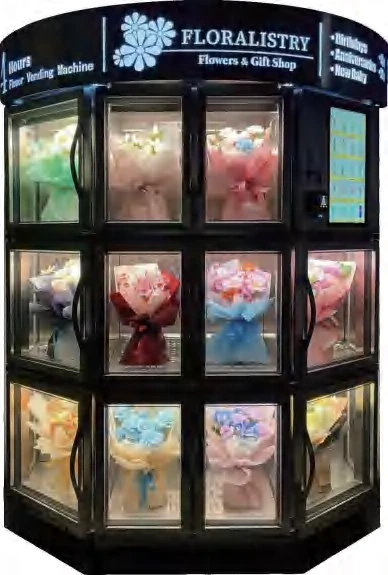
A window cabinet displays bouquets behind full-height glass. A compartment cabinet gives each bouquet its own door. The compartment format is easier for pickup and protects the bouquet from being handled by other customers, but it limits the number of bouquets per cubic metre.
How many compartments do you need?
The right number is the number you can keep full. A cabinet with 24 doors that is half empty looks like a failing shop; a cabinet with 8 doors that is always full looks like a successful one.
Estimate daily sales for each bouquet format, then multiply by the days between restocks. Add a small buffer for weekends and holidays. If the total exceeds the compartment count, either add a cabinet or reduce the number of formats. The 10-door cabinet and the 24-door cabinet bracket the common range.
| Format | Typical compartment count | Best for |
|---|---|---|
| Window display | About 11 bouquets | High-visibility corridors, gift occasions |
| Compact compartment | 8–10 doors | Small sites, single-stem and small bouquets |
| Medium compartment | 13 doors | Mixed bouquets and gift sets |
| Large compartment | 24 doors | High-SKU retail, seasonal campaigns |
What cooling and glass specification matters?
Fresh flowers need a stable chilled range. A cabinet rated +4°C to +25°C can hold flowers at the low end, but the recovery after a door opening matters as much as the setpoint. A refrigerated locker in the locker and smart cabinet line uses the same cooling requirement in a compartment format. Look for:
- A cooling system sized for the site temperature, not just the catalog;
- Double-layer anti-fog glass;
- Even air distribution without drying the flowers;
- A door that closes reliably and seals well;
- A drip tray that can be removed for cleaning.
In a warm mall corridor, a single-pane glass door will fog and the flowers will be invisible. Anti-fog glass is not a luxury; it is part of the product display.
Where should the cabinet be placed?
Flower vending depends on impulse and gifting. The best positions are:
- Near the exit of a supermarket or mall, where customers pass with disposable income;
- Beside a cinema or restaurant, where gifting occasions are concentrated;
- In a hospital or clinic lobby, where visitors buy flowers on the way in;
- In a metro or rail station with high footfall and a gifting pattern.
The retail venue solution covers mall and cinema sites; the transit hub solution and the healthcare solution cover stations and hospital lobbies. The mall blind-box and flower case shows a mixed retail installation, and the hospital pharmacy case shows a lobby with several self-service formats.
Avoid direct sunlight, heat sources and tight niches without ventilation. The cabinet needs airflow to reject heat, and the glass should not face a bright window.
How should the assortment change by season?
Flower demand is seasonal. Valentine’s Day, Mother’s Day, Qixi and year-end holidays concentrate demand into short windows. The cabinet should be able to switch from single stems to premium gift sets without a hardware change.
Plan the assortment in three layers:
- Everyday: single stems and small bouquets at an impulse price.
- Weekly: mixed bouquets for regular buyers.
- Seasonal: premium arrangements and gift sets for peak dates.
The screen catalog, lighting and shelf dividers should be easy to change between layers. A cabinet that requires a new planogram for every campaign is a cabinet that will be left with the same assortment all year. The software platform should let the operator change the catalogue and the price without a factory visit; the OEM scope covers a change of light box or door graphics.
How do you protect margin?
Flower margin is protected by rotation, not by price. A bouquet that stays in the cabinet too long loses value and damages the cabinet’s reputation. Set a clear rotation rule:
- Inspect every bouquet daily;
- Remove anything past its best before the evening peak;
- Record shrinkage by format and supplier;
- Adjust order quantities weekly, not monthly.
The cabinet’s temperature log helps, but it cannot replace inspection. A flower that was warm before it entered the cabinet will not recover. The temperature guide explains how to verify the cold chain at the site, and the locker guide covers the compartment pickup model that suits gift sets.
What should buyers verify with flower vending suppliers?
Ask for the compartment dimensions, the cooling range at the site temperature, the glass specification, the lighting color temperature and the door lock type. Ask how the cabinet handles condensation and how the shelves are cleaned.
Ask for a sample bouquet test. Put your actual bouquets in the cabinet for a week and check the condition, the fogging and the customer access. A flower cabinet is a display case with a payment terminal; the display quality is the product. The cost guide explains which specifications move the price, and the selection framework covers the product-list decisions.
Flower vending is a good business when the cabinet, the assortment and the rotation routine are designed together. The machine is only the visible part. The smart cabinet guide covers recognition-based formats for gift and mixed retail, and the fresh food line shows the chilled cabinet family for food. For a flower project review, contact the VendHarbor team with the bouquet dimensions and the site type.
Next step
Turn this guide into a configured machine
Send the product list, site conditions and target volume. We reply with a configuration, lead time and quotation — usually within one business day.
Machines mentioned in this article
 Flagship
Flowers & gifts
Window Flower Vending Machine
A full-height glass display for bouquets and single stems.
View details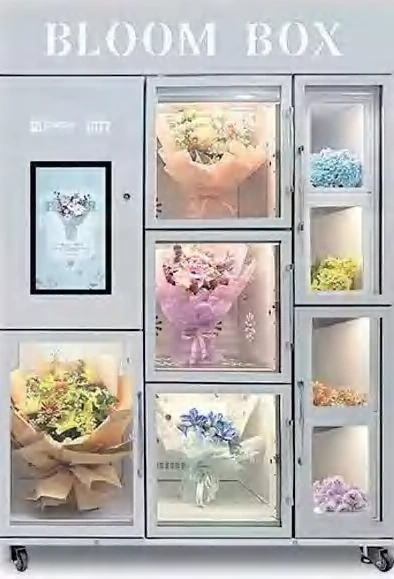 Flagship
Flowers & gifts
Grid Flower Vending Machine
Eight independent compartments, each holding a complete bouquet.
View details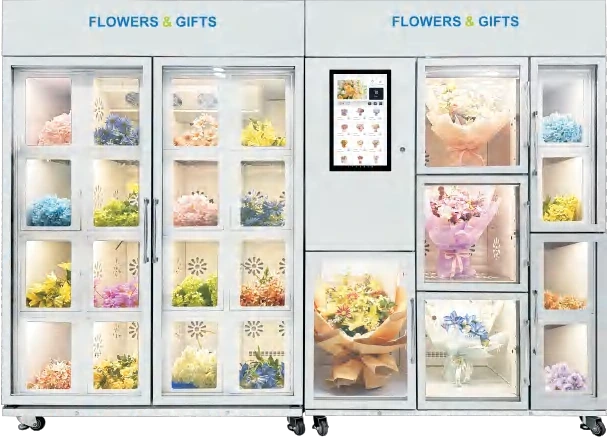
Flowers & gifts
24-Compartment Flower & Gift Machine
High-SKU flower and gift cabinet for busy retail locations.
View configuration