Vending Machine Temperature Ranges: What to Check
How +4°C to +25°C cooling works in vending machines, which products need which band, and the site conditions that change cooling load.
Quick answer: 2127×1893×1136 mm · +4°C to +25°C · 3000 W
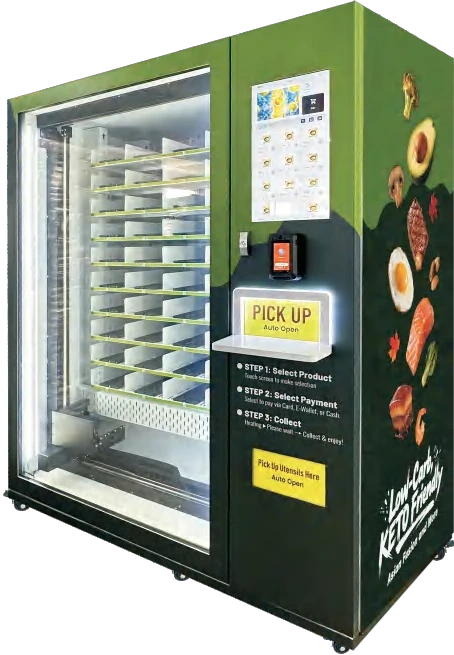
Temperature is the specification that buyers check last and regret first. A vending machine that cannot hold the product at the right temperature will sell warm drinks, melt chocolate, wilt flowers or create a food-safety problem. The cabinet may look identical; the cooling system inside is not.
This guide explains the common temperature bands, how a single-zone cabinet behaves, and the site conditions that change the cooling load. The fresh food line and the flower and gift line contain most of the chilled examples; the product overview maps the full range.
What temperature bands do vending machines use?
Most vending cabinets fall into one of four practical bands:
| Band | Typical use | Notes |
|---|---|---|
| Ambient | Snacks, packaged goods, toiletries | No active cooling; cabinet may still have ventilation |
| Chilled | Drinks, fresh food, flowers, some pharmacy | Usually +4°C to +8°C at the product |
| Wide range | Mixed drinks and shelf-stable snacks | Cabinet rated +4°C to +25°C; one zone at a time |
| Frozen | Ice cream, frozen meals | Requires a different cooling plant and defrost cycle |
The wide-range label is common in export catalogs because it sounds flexible. In practice, a single-zone cabinet holds one temperature band at a time. If the setpoint is +6°C, the snack shelves are also at +6°C. If the setpoint is +20°C, the drinks are not cold. The snack and beverage line uses this wide-range configuration in its standard cabinets. Frozen products are a separate case again; an ice cream cabinet is built for a different duty cycle.
Why does a wide range matter?
A wide-range cabinet is useful for a route that sells both chilled drinks and ambient snacks in the same cabinet. The operator sets the temperature for the dominant product and accepts that the other products are stored at that temperature. This is acceptable for shelf-stable snacks, but not for fresh food or flowers.
For mixed chilled and ambient products, the better solution is a combination cabinet with separate zones, or two cabinets linked to one payment terminal. A combo elevator machine or a multi-function combo does this with one control system. The extra cabinet costs more than a wide-range model, but it protects both product categories.
What changes the cooling load on site?
The factory test is usually run at a controlled ambient temperature. The site is not controlled. The main factors are:
- Ambient temperature: a 35°C corridor is a harder duty than a 22°C office.
- Solar gain: a cabinet facing a glass facade absorbs radiant heat.
- Door openings: every transaction lets cold air out and warm air in.
- Stocking density: a full cabinet holds temperature better than an empty one.
- Ventilation: a cabinet pushed into a niche cannot reject heat.
- Product load: warm products loaded after restocking raise the cabinet temperature.
A cabinet rated for +4°C at 25°C ambient may not hold +4°C at 35°C ambient. Ask the supplier for the cooling capacity at the site temperature, not only the catalog setpoint. A refrigerated locker has a different load profile again, because every door opening releases cold air from a small compartment.
How should fresh food and flowers be handled?
Fresh food and flowers need a stable chilled range, not just a low setpoint. The cabinet should recover quickly after a door opening and should not cycle widely between day and night. Look for:
- Continuous temperature logging;
- A defrost cycle that does not warm the product;
- Even air distribution across shelves;
- A door or curtain that limits cold-air loss;
- A cleaning routine that does not leave the door open.
For flowers, the cooling range is only one part of the cold chain. Pre-cooling, water quality and rotation matter as much as the cabinet. A flower cabinet cannot rescue flowers that arrived warm. The window flower cabinet and the flower vending guide cover the display and handling side.
Fresh food cabinets follow the same logic but with a shorter shelf life. A bento box cabinet needs upright delivery and a temperature log that matches the food-safety routine. The healthcare solution and the hospital pharmacy case show how chilled cabinets are specified when the product is regulated. Retail venues face the same display problem with flowers; the retail venue solution and the mall blind-box and flower case show the layout.
What about hot food and hot drinks?
Hot food and hot drinks use heated cabinets or brewing platforms, not refrigeration. The safety considerations are different: holding temperature, ventilation, burn protection and cleaning. A coffee platform or a tea machine is a brewing system with its own water and cleaning routine; an instant noodle machine adds hot water and cup handling. A heated cabinet should maintain the food above the hot-holding threshold and should be emptied and cleaned daily.
Combination machines that hold both hot and cold products need separate compartments and separate cleaning routines. Do not assume that a refrigerated cabinet with a heater module is a true hot-food cabinet.
How do you verify temperature after installation?
Put a calibrated data logger on the shelf, not just at the return-air sensor. Run the cabinet for 24–48 hours with a representative product load and normal door openings. Record the maximum and minimum product temperature, not only the air temperature.
If the product temperature is outside the target band, check the setpoint, the door seal, the ventilation clearance and the stocking pattern before calling the factory. Most temperature complaints are installation or loading problems, not cooling-system failures. A pharmacy cabinet with continuous logging makes this diagnosis faster, because the history shows when the excursion started.
Temperature is a system property: cabinet, site, product load and service routine. Specify the band, verify it on site, and log it continuously. That is the difference between a machine that sells fresh food and a machine that creates refunds. The software platform should expose the logs; the cost guide explains why a better cooling package is cheaper than a spoilage claim. For a site review, send the product list and installation conditions to the VendHarbor team, and compare the delivery-system options before fixing the cabinet. If the format is still open, the selection framework and the smart cabinet guide cover the alternatives.
Next step
Turn this guide into a configured machine
Send the product list, site conditions and target volume. We reply with a configuration, lead time and quotation — usually within one business day.
Machines mentioned in this article
FlagshipFresh food & drinks
Refrigerated Bento Box Vending Machine
Ten shelves, 120 boxes and upright elevator delivery for prepared meals.
View details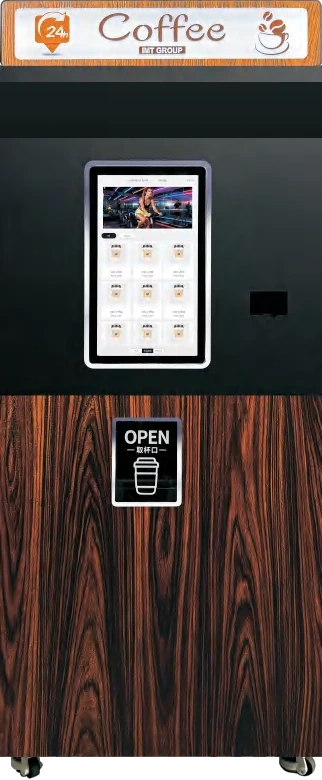 Flagship
Fresh food & drinks
Freshly Ground Coffee Vending Machine
Bean-to-cup coffee, six instant canisters and 150 cups per fill.
View details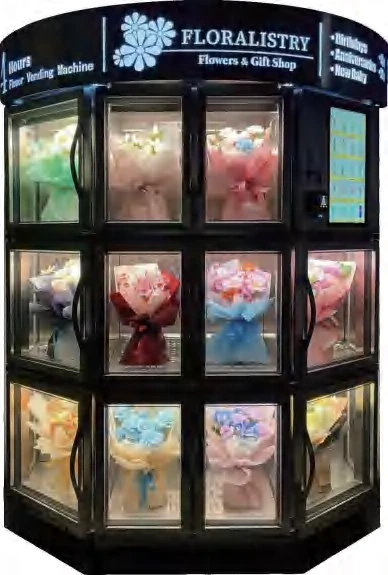 Flagship
Flowers & gifts
Window Flower Vending Machine
A full-height glass display for bouquets and single stems.
View details