How to Choose a Vending Machine Manufacturer
What to verify before ordering: factory capability, OEM scope, MOQ, lead time, certification, spare parts and buyer-protection terms.
Quick answer: 1942×1096×790 mm · +4°C to +25°C · 550 W
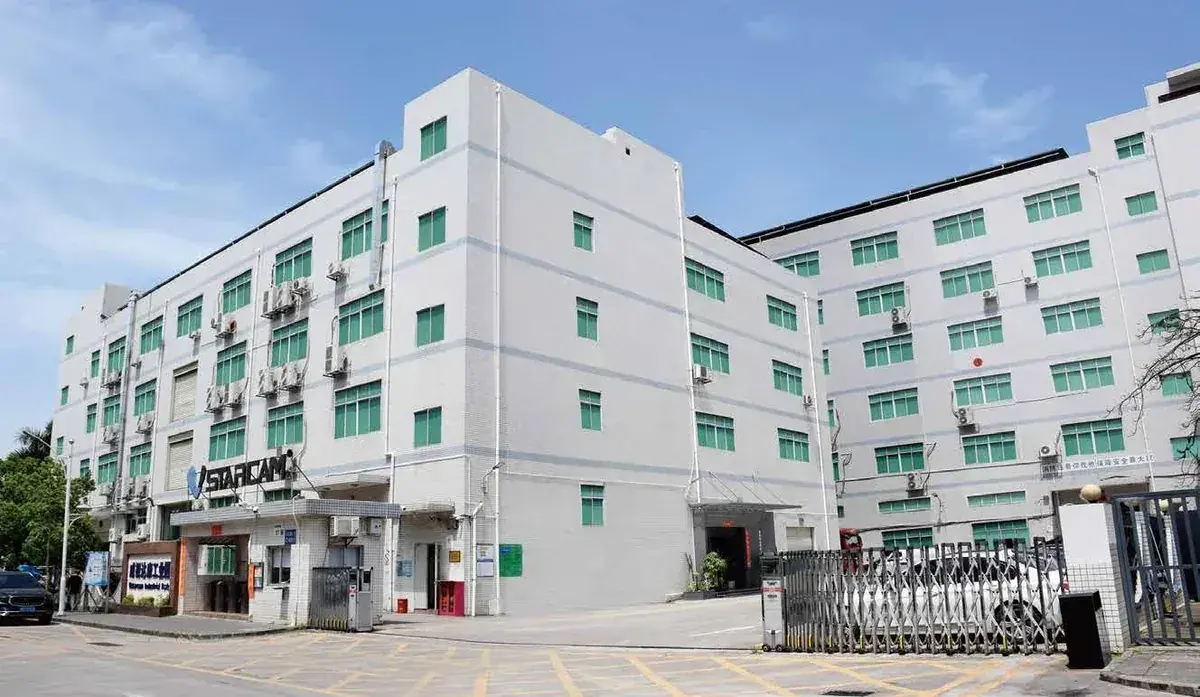
A vending machine is a long-lived capital asset that must be serviced in a market far from the factory. The purchase decision is therefore not only about price per unit. It is about whether the manufacturer can build the same machine twice, document it, supply parts for years and support the operator when something fails.
This guide is written for distributors, operators and project buyers who are comparing factories. It covers the evidence to request, the difference between OEM and ODM, realistic MOQ and lead time, and the terms that should be agreed before the deposit. The OEM and ODM scope describes the customization work in more detail.
What should a vending machine manufacturer prove?
A manufacturer should be able to prove four things: that it owns or controls the production process, that it has built the model before, that it can document the machine, and that it can support it after delivery.
The production process is the first check. Sheet-metal fabrication, assembly, wiring, refrigeration charging, testing and packing are distinct steps. A factory that outsources the cabinet but controls assembly is a different supplier from one that controls the full chain. Ask which steps happen on site and which are subcontracted. The snack and beverage line and the locker and smart cabinet line are useful references because they exercise different parts of the chain: one is high-volume assembly, the other is door, lock and refrigeration work.
The second check is reference builds. Ask for the model history, the markets it has shipped to and the payment configurations it has integrated. A factory that has never built a chilled locker for a humid market may still be able to, but the risk is higher. Ask specifically about comparable builds such as the 60-slot touchscreen cabinet, the refrigerated locker and a coffee platform.
How do you audit a factory without visiting?
Start with documents: business licence, factory address, product certificates and recent inspection reports. Then ask for a live video walk-through of the line, not a edited tour video. A live call can show the press, the welding jig, the assembly bays and the test area in sequence.
Ask for a video of the exact model you are buying, running the product list you intend to sell. Show the largest and smallest package, the payment flow and the fault handling. A demonstration on a different model is not evidence for your configuration — a 54-slot elevator machine and a bento box cabinet fail in different ways, so the test must match the delivery system.
If the order is large enough, visit or appoint a third-party inspector. The inspection should cover the cabinet dimensions, the refrigeration pull-down test, the delivery cycle, the payment modules and the packing. The cost of an inspection is small compared with a container of machines that do not fit the product.
What does OEM and ODM mean in vending?
The terms are used loosely. In practice there are three levels of change, and each has a different cost and risk profile.
| Level | What changes | Tooling | MOQ impact |
|---|---|---|---|
| Catalogue model | Standard cabinet, standard layout | None | Standard order quantity |
| Configured model | Color, logo, light box, shelf pitch, payment, language | No new mold | Low to moderate |
| New structure | Chassis, door, compartment layout, dispensing mechanism | New tooling | High, with development cost |
A configured model is the usual starting point for a distributor: the buyer gets a differentiated cabinet without paying for a new chassis. A 60-slot button cabinet with a custom color, light box and shelf pitch is a typical example. A new structure is justified when the product cannot fit any standard platform, for example an unusual package or a dedicated pickup flow — the flower compartment cabinet and the 155-slot pharmacy cabinet are examples of structures built around a specific product and access model.
Be explicit about who owns the tooling, the drawings and the firmware changes. A custom cabinet that cannot be reordered from a second supplier is a long-term dependency; that may be acceptable, but it should be a decision, not a surprise.
What is a realistic MOQ?
MOQ follows the change, not the catalogue. A standard model may be available in small quantities; a color and logo change may require a modest batch; a new structure may require a much larger commitment to amortize tooling.
Ask three questions: what is the MOQ for the standard model, what is the MOQ with my branding, and what is the MOQ if I change the shelf layout? The answers should come with the technical proposal, not as a separate sales negotiation.
Do not treat a low MOQ as an advantage by itself. A very low MOQ on a custom cabinet may mean the factory is absorbing development cost into the unit price, or that the customization is only a label change. Compare the total cost of the first order and the reorder cost. A master-slave combination is often a better way to raise capacity than a custom cabinet, because it uses standard cabinets and a shared control system.
What lead time should you plan for?
Lead time starts when the configuration is frozen, not when the inquiry is sent. A standard machine with a standard payment kit is faster than a machine with a new payment module, a custom color and a new light box.
Ask for the lead time in stages: drawing approval, production, testing, packing and shipping. A single number hides the dependency. If the payment module is supplied by the buyer, the production schedule must include the module arrival date; the payment options guide explains why the module choice affects certification and testing. The delivery system also changes the test cycle, as the spiral versus elevator comparison shows.
Add buffer for certification, freight booking and customs. A machine that leaves the factory on time but misses the vessel is late. For a first order, plan a sample or pilot unit before the full container; the selection framework explains how to validate the configuration.
What certifications and documents should you request?
The certificate is not enough; the test report and the model scope matter. A certificate for a different cabinet size or a different control board does not automatically cover the machine you are buying.
| Document | Why you need it | What to check |
|---|---|---|
| Certificate and test report | Market access and customer confidence | Model number, standard, laboratory, date |
| Declaration of conformity | Customs and marketplace requirements | Issuer, product scope, revision |
| Spare parts list | Service and reorder planning | Part numbers, prices, lead time |
| Manual and wiring diagram | Installation and maintenance | Language, revision, completeness |
| Packing list and container plan | Freight and unloading | Dimensions, weight, stackability |
Ask for the documents in the language of the destination market. A manual that only exists in Chinese is a service problem for the operator’s technicians.
How do you compare quotations from different factories?
Put every offer into the same specification table: dimensions, weight, slot count, product envelope, cooling range, voltage, power, delivery system, payment modules, control board, warranty, spare parts and documentation. Then compare the price against the same scope.
Look for what is excluded. Common exclusions are customs clearance, local certification, merchant account setup, installation, training, the first spare-parts kit and the freight. A quotation that lists exclusions is easier to compare than one that looks cheaper because the missing items are silent.
Ask for a line-by-line breakdown if the gap is large. A factory that can explain the cost of the cabinet, the cooling system, the electronics, the payment kit and the packaging is easier to hold to a specification. The cost guide explains the cost drivers in more detail.
What after-sales and spare parts support matters?
The machine will fail somewhere. The question is how quickly the operator can diagnose and repair it. Ask for the fault-code list, the remote diagnostic capability, the spare-parts lead time and the warranty terms for the main components. The software platform is part of this conversation: remote diagnostics and event logs reduce the need for a site visit, but only if the platform exposes them.
A first spare-parts kit should cover the parts that stop a sale: delivery motors, sensors, control board, lock modules, payment components and shelf parts. The exact kit depends on the machine and the distance to the service base.
Training matters as much as parts. Ask for a service manual, a wiring diagram and a video session for the technician. If the operator has never serviced a refrigerated cabinet, the first summer will expose the gap. The route planning guide covers the operating routine that keeps the machines running.
What should be in the supply agreement?
The agreement should fix the configuration, the acceptance criteria, the lead time, the warranty, the spare-parts commitment and the payment terms. It should also state who owns the tooling and the drawings, and what happens if a component is discontinued.
Acceptance criteria are the most useful clause. Define the tests: delivery success rate on the product list, cooling pull-down, payment success, door or lock cycle, and the packing condition. A machine that passes the tests is accepted; a machine that fails is repaired or replaced before shipment. The tests should use the real product list; a general merchandise cabinet and a 36-slot snack cabinet cannot be accepted on the same drop test.
Ask for the warranty start date and what it covers. A warranty that starts at shipment expires before the machine is installed in a distant market. A warranty that covers only the control board is not the same as one that covers the compressor and the delivery mechanism.
For a manufacturer review, contact the VendHarbor team with the product list, target market, quantity and customization scope. The about page describes the Guangzhou factory, and the product overview lists the platform families available for OEM and ODM projects. If the project is for a transport or workplace site, the transit hub solution and the office coffee and lunch case show how a mixed fleet is specified.
Next step
Turn this guide into a configured machine
Send the product list, site conditions and target volume. We reply with a configuration, lead time and quotation — usually within one business day.
Machines mentioned in this article
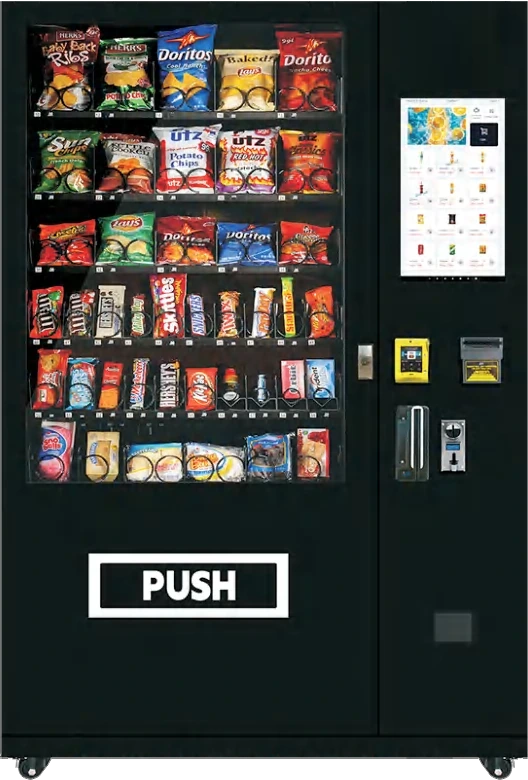 Flagship
Snacks & drinks
60-Slot Touchscreen Vending Machine
Six shelves, 300 items and a 7.1-inch touchscreen for drinks and snacks.
View details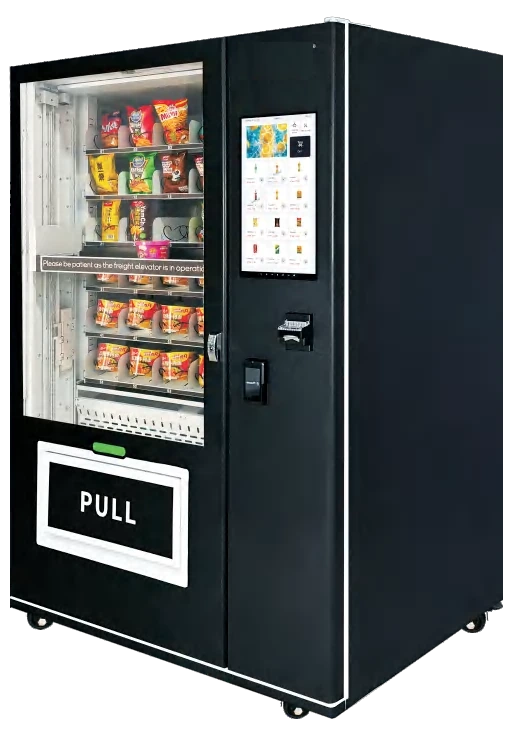 Flagship
Snacks & drinks
54-Slot Elevator Vending Machine
Gentle elevator delivery for fragile, irregular and heavier products.
View details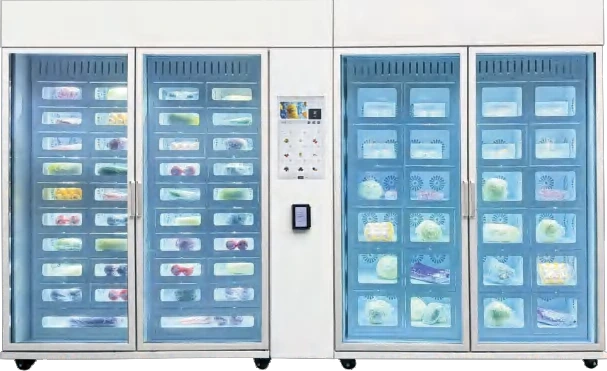
Lockers & smart cabinets
62-Compartment Refrigerated Locker
Sixty-two chilled doors for food, flowers and pharmacy.
View configuration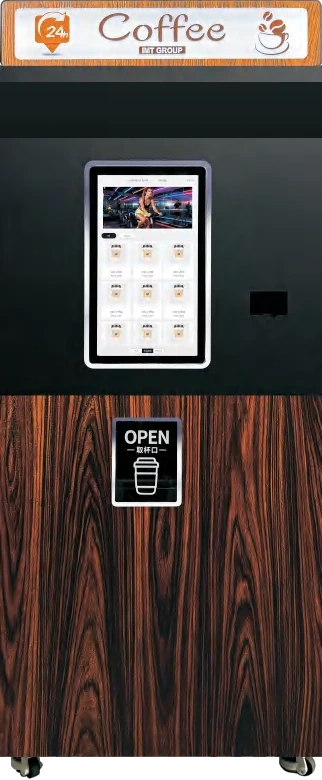 Flagship
Fresh food & drinks
Freshly Ground Coffee Vending Machine
Bean-to-cup coffee, six instant canisters and 150 cups per fill.
View details